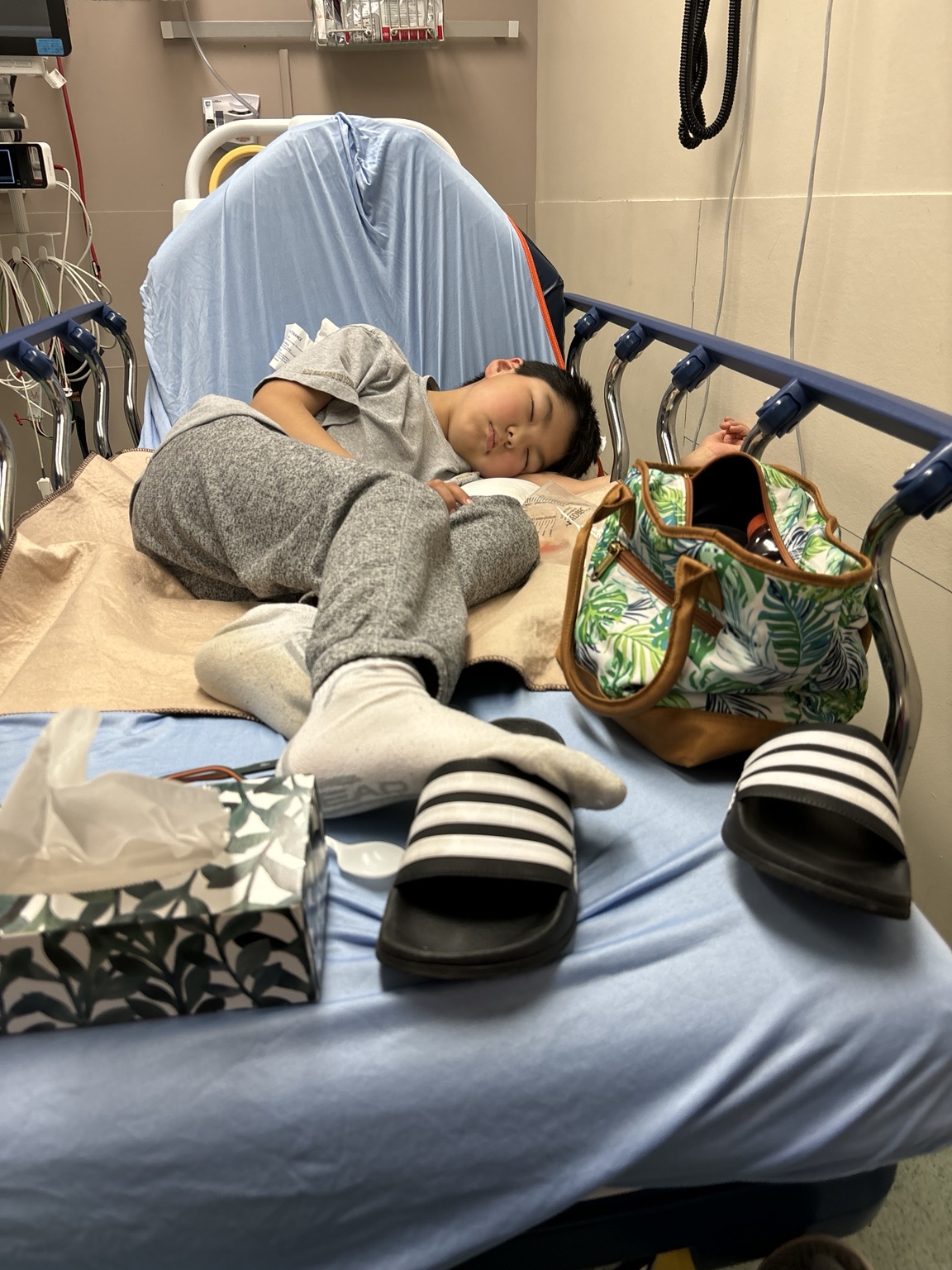
👣Lucas's Experience
Finding answers—and coordinating the people involved
Lucas was already receiving care at SickKids for other medical concerns when a physician suggested a sleep study. Before the diagnosis, we knew he was always tired, but we also felt there was more happening. We worried about whether it would be life-altering and felt both relief and fear when we finally had an answer.
Finding professionals who understand the many ways narcolepsy affects daily life has remained challenging. Communication between a pediatrician, family doctor, sleep team and other specialists does not always happen automatically. Like many families managing complex care, we often became the respectful case coordinators—carrying information from one appointment to the next and helping each professional see the full picture.
We remain grateful for our SickKids Nurse Practitioner, who was responsive by email and phone and even helped us while we were outside Canada and urgently needed guidance. One knowledgeable, accessible professional can make an enormous difference.
From Our Family
Create one reliable home for your information
Keep a binder or secure digital folder with a separate section for each specialist. Include appointment notes, test results, current medications, past medication effects, school documents, contact information and a running question list.
Take lots of notes
Appointments move quickly. Write down what changed, who is following up and when you should hear back.
Bring a support person
A trusted friend or family member can listen, take notes and remember details you may miss while processing difficult information.
Share the complete picture
Bring information about sleep, school, mood, energy, medication responses and daily functioning—not only the symptom that triggered the appointment.
Ask how teams communicate
Clarify who sends reports, who receives them and who is responsible for follow-up. Never assume every provider has the same information.
A respectful partnership
Medical knowledge and lived experience belong at the same table
Healthcare professionals bring clinical knowledge. Parents and patients bring detailed lived experience. The strongest care happens when both perspectives are heard and respected.
Medication experiences differ widely. Lucas tried several medications over three years and experienced intense side effects before finding a current treatment that has been better tolerated. This is his experience—not a recommendation. Treatment choices and changes belong with the patient's healthcare team.
Questions you may wish to ask
Leave with a plan you understand
- What symptoms should we track between appointments?
- Who should we contact if symptoms or side effects change?
- How will information be shared with our other healthcare providers?
- What changes should prompt an earlier follow-up?
- How might school, puberty, travel or other conditions affect daily management?
- Are there additional referrals or supports we should discuss?
Family Wisdom
You are an essential member of the care team
You will always be one of your loved one's strongest advocates. Keep the conversation open. Never stop learning, and pull ideas, strategies and support from many places. We live in Canada, but knowledge and community can come from all over the world.
Parents become experts in their own child's experience. Advocacy can be firm and respectful at the same time.